
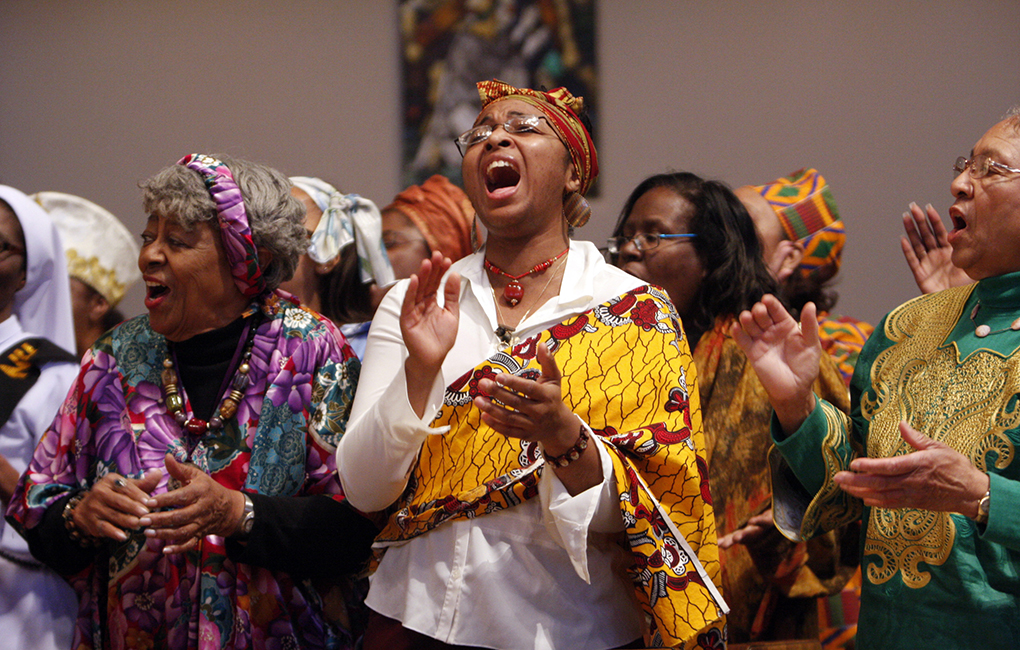
Psalm 95 was written for public worship in Israel, and its structure shows two distinct purposes:
1. Invitation to Joyful Worship (vv. 1–7a)
The opening half is a processional hymn of praise. It calls God’s people to gather, sing, shout, kneel, and bow before the Lord. The psalm highlights:
- God as Creator – He made the sea, mountains, and dry land.
- God as King – “a great King above all gods.”
- God as Shepherd – His people are “the sheep of His hand.”
This part of the psalm was likely used at the Temple or tabernacle as an invitation for worshipers to come before God with thanksgiving and music.
2. Warning from Israel’s History (vv. 7b–11)
The second half shifts tone dramatically. It warns the worshipers not to repeat the hardness of heart shown at Massah and Meribah (Exodus 17:1–7; Numbers 20:2–13), when Israel tested God in the wilderness. Instead of worship, the people had rebelled even after God’s mighty works.
This section likely served as a liturgical reminder during worship, that true worship is not only outward singing, but obedience and faithfulness. The ultimate warning is: those who rebel “shall not enter My rest,” which echoes God’s judgment on the Exodus generation who were barred from entering the Promised Land.
When the Psalmist Says God Was “Disgusted” With Us
Psalm 95 is one of those psalms that begins with joy and flips a switch and comes at you.
It starts in the sanctuary of song—“Come, let us sing for joy to the Lord, let us shout joyfully to the Rock of our salvation!”—but ends with a heavy warning:
“For forty years I was disgusted with that generation,
And said, ‘They are a people who err in their heart,
And they do not know My ways.’” (Psalm 95:10)
How do we reconcile this? A God who is “disgusted” with us. I thought we were singing about how great, merciful, patient, and steadfast God is? What happened?! Unfortunately, almost everyone who has truly sought God, has landed in a church that seems to only know a a God who is angry with us. Maybe that is how they learned to keep people in line. But I don’t see God as being that one dimensional. Lets take a minute to explore a better understanding of verse 10.
The Language of Emotion in Poetry
The psalmist is not trying to offer a full theological profile of God’s inner life. He is using poetic license. In the ancient world, worship was often designed to strike the heart more than satisfy the mind. Strong emotional language—disgust, anger, wrath—was meant to make people feel the seriousness of rebellion, not to suggest that God is at all like us in our emotional reactions.
It’s what scholars call anthropopathic language: attributing human emotions to God to help us understand His relational engagement with His people. (I’m glad I researched this because for years I’ve seen it in scripture but didn’t know there was a name for it.)
Why the Harsh Words?
The first half of Psalm 95 invites us into joyful worship, but the second half warns us not to repeat the failures of Israel in the wilderness. The people who had seen God’s mighty works still hardened their hearts.

The word “disgust” is shocking on purpose. It is a wake-up call, a reminder that rebellion against God is not neutral, it is corrosive, destructive, and tragic. The psalmist is using the strongest possible word to drive that reality home. Which is perhaps necessary when we are singing and dancing and raptured in God’s goodness.
Mercy and Judgment Together
But this is not the whole story. The same Scriptures that speak of God’s opposition to sin are filled with affirmations of His mercy:
- “The Lord is compassionate and gracious, slow to anger and abounding in lovingkindness.” (Psalm 103:8)
- “The steadfast love of the Lord never ceases; His mercies never come to an end.” (Lamentations 3:22)
In fact, even the wilderness story that Psalm 95 recalls is full of God’s patience. Though He judged that generation, He continued to feed them manna, bring them water from the rock, and dwell in their midst. It’s important to remember that their unbelief did not cancel His covenant love.
The Real Danger: Making God in Our Image
The danger isn’t in the psalmist’s use of strong words, it’s in our interpretation. If we take “disgust” as the whole truth about God, we reduce Him to a volatile version of ourselves.
The psalmist is painting one stroke of a much bigger portrait. The full canvas of Scripture shows a God who is both holy and merciful, both just and patient, both unwilling to let rebellion stand and yet always seeking restoration.
What This Means for Us

Psalm 95’s warning is not meant to make us cower, but to call us to a deeper understanding of worship. Worship is not just about singing, feeling the Spirit, or trying to conjure up emotions that might reflect “holiness.” Yes, it is responding to God with soft hearts, but it is also setting our minds to trust Him and living into His will. Community worship is the reset we need, and it continues as we live out that balance in our everyday lives (Romans 12:1-2).
The God who is described here as “disgusted” with rebellion is the same God who, in Christ, goes to the cross to rescue us rebels. If anything, this verse now makes the mercy of Jesus shine even brighter.
The line we must not cross is mistaking one image of God for the whole.
The psalmist gives us the language of warning; elsewhere Scripture gives us the language of embrace. Together, they lead us not to despair, but to awe. A God who is utterly holy and yet endlessly merciful, who takes rebellion seriously but loves us too much to let it destroy us.
Psalm 95 Use in Jewish and Christian Tradition
- In Judaism, Psalm 95 became part of daily synagogue prayers (the Kabbalat Shabbat service to welcome the Sabbath).
- In Christianity, it’s used in the Liturgy of the Hours (the Venite in morning prayer). The New Testament book of Hebrews 3–4 also cites it, applying the same warning about “entering God’s rest” to the spiritual rest found in Christ.
In short: Psalm 95 was written as both a hymn of praise and a sober reminder. Praise for Israel’s worship gatherings. And a sober reminder that genuine worship must be matched by trust and obedience to God.