
Our Feelings Matter
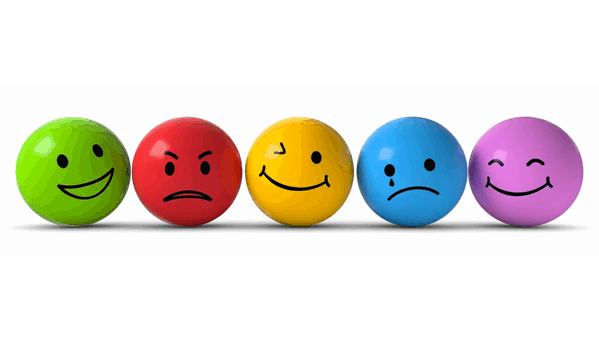
I’ve spent most of my life trying not to feel emotions.
When I was a kid, I watched the movies. I got the message. Boys don’t cry. Boys don’t get sad. And we sure don’t show weakness, in fact we don’t show any emotion unless it’s anger, and then only in a way that proves you’re tough. So I toughened up. I wanted to be strong. Maybe even untouchable. I wanted to be the kind of guy no one could mess with.
And I got good at it.
I also learned, whether spoken or not, that my emotions were inconvenient. They didn’t help. They weren’t received well. My parents—probably doing the best they could—reflected back to me that when I had strong emotions, I was just being a pain in the ass. So I shut that part of me down.
By the time I was a young adult, expressing any emotion was risky. If I got excited about something, I was “too much.” If I got hurt, I was “too sensitive.” Emotions became liabilities. Data points others could use to define me or dismiss me or worse, weaponize against me. I ended up with a label I couldn’t remove.
And then I became a business owner.
When you’re the boss, your emotional world gets amplified. If you’re anxious, your team panics. When you’re angry, people assume you’re angry at them. If you’re vulnerable, people start whispering about instability. As a business owner, you carry the responsibility of only showing emotions strategically. Real emotion becomes a risk. A lawsuit. A landmine.
So you learn not to show it. And eventually, without realizing it, you start to not to feel it.
The only emotion that survived the purge was anger. It’s sharp. It’s efficient. It says “back off” without having to explain anything. But even that isn’t honest, it’s usually just fear or sadness with a mask on.
Psalm 42 Tells Me I’m Not Broken—Just Human
When I read Psalm 42 now, it feels like someone left a microphone on inside their soul and just ranted. No image management. No political correctness. It’s like they forgot this was gonna be in the Bible haha.
Just a heart saying:
“I’m not okay—and I want to believe I will be.”
That’s not weakness. That’s truth. And all truth, no matter how ugly, is holy ground.
Our Emotions Aren’t the Problem—They’re Part of the Image
This is where it gets wild.
If we are made in the image of God (Genesis 1:27), and if we believe Jesus is the full image of God revealed in human form (Colossians 1:15), then our emotional lives aren’t obstacles to holiness, they’re reflections of it.
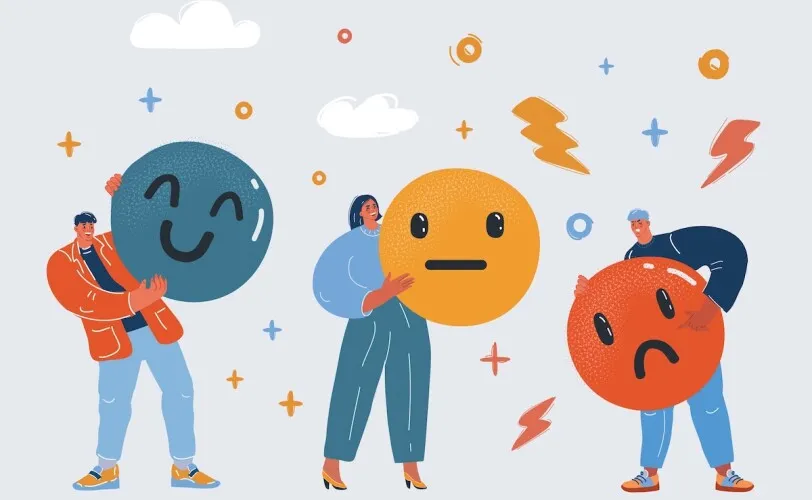
- God weeps (John 11:35).
- God rejoices (Zephaniah 3:17).
- God gets angry (Exodus 34:6).
- God feels compassion (Hosea 11:8).
- The Spirit groans (Romans 8:26).
- God feels regret (1 Samuel 15:11)
If God feels, and we are made to reflect Him, then our emotions matter.
They’re not intellectual failures. They’re part of being fully alive. They give us access to empathy, connection, creativity, and even worship. Suppressing them doesn’t make us stronger, it just makes us less human.
Are Men and Women Wired Differently?
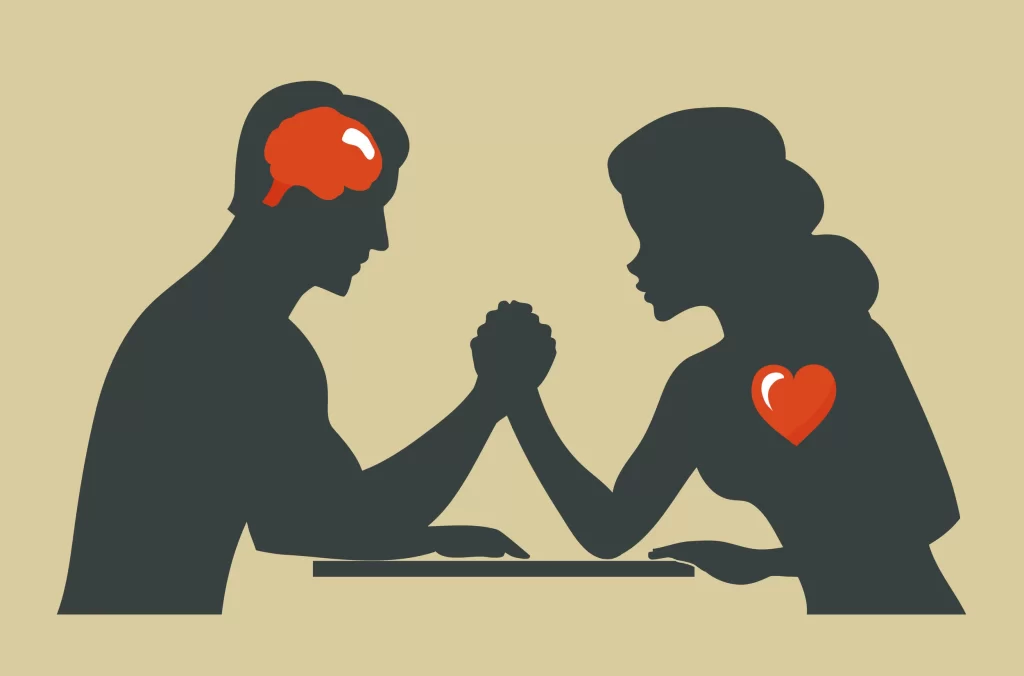
Here’s a question that’s lived in the background for a long time, and I think it’s time to say it out loud:
Are women more emotionally expressive because of culture or because of design?
And are men more drawn to logic because God made us that way or did society just give us permission to camp out there?
Maybe the answer is yes to both. Scripture tells us God created male and female in His image (Genesis 1:27). That’s not sameness, it’s two sides of the same coin.
Think about it:
- Women often express emotion when a problem arises. They are like an artist with a brush, layering color and texture until you can see what sorrow or joy or longing actually feels like.
- Men, often, are drawn to analyze the problem to examine it, turn it over and look at it from every different angle, try to understand it and fix it.
One is not better than the other. They are complementary ways of engaging the same reality.
That sounds a lot like wisdom to me. That sounds like how relationships work and grow.
It’s not yin and yang in some mystical sense but it’s not far off. God made us for connection, and connection takes more than one way of seeing and expressing what we’re seeing and feeling. What if rather than criticize each other for not being more like each other, we hold space for each other to fully express how we’re made.
There’s No “Right” Way to Feel—But There Are Better Ways to Express It

Let’s be honest: some expressions of emotion can destroy a relationship. Anger that becomes violent. Self-pity that manipulates. Optimism or pessimism that refuses to see. Jealousy that erodes all trust.
But the answer isn’t to suppress what we feel, it’s to learn how to name it, own it, talk about it and share it in ways that invite understanding rather than control. By doing so we take away its power to destroy the relationship and use that power to grow the relationship.
And just to be clear:
I’m not saying men shouldn’t feel, or that they’re only logical. We should allow ourselves to feel, even if our default setting isn’t as emotionally intense or expressive. There’s value in expressing what’s under the surface. Because being aware of our own emotional world makes us more whole, and more trustworthy in relationships.
And I’m not saying women are irrational or emotionally out of control. Far from it. The ability to feel deeply is not a weakness, it’s strength. And many women bring powerful logic and problem-solving to the table, even if their first impulse is to lead with feeling.
We both—men and women—bear God’s image. We reflect it differently, but not competitively. Not one over the other. In a healthy relationship, emotion and logic aren’t enemies. They’re dance partners.

Imagine This…
- What if we gave women the space to feel their emotions fully without trying to fix them or dismiss them?
- What if we gave men the freedom to express feeling without shame and women the freedom to solve problems without being called cold?
- What if women could paint the emotional landscape, and men could study it like a map and both ways were honored?
Maybe we’d stop competing.
We’d start complementing.
We’d become a team.
Final Words
I used to think emotions were a liability. Now I’m learning they’re a language. A way of seeing and speaking and connecting, not just with others, but with God.
Psalm 42 doesn’t teach us how to get rid of our feelings. It teaches us how to stay with them. How to talk to our soul. How to name what’s real and still choose hope.
Because being made in God’s image doesn’t mean you always feel good.
It means you feel deeply—and you keep showing up anyway.