

Before we get into Psalm 42 and how it relates to depression, it gives us a strange heading—“A Maskil of the sons of Korah.” This forgotten intro might be the key to the whole psalm.
We usually skip the line at the top. You know the one. That ancient-sounding superscription we brush past to get to the “real” psalm:
For the music director. A Maskil of the sons of Korah. (Psalm 42:1)
But the more I sit with it, the more I realize that this heading is doing a lot of heavy lifting. It sets the stage—not just musically, but theologically, emotionally, and narratively. It’s not just production credits. It’s context, identity and transformation.
So I started digging. What exactly is a Maskil? Who are the sons of Korah? And what does this have to do with the rest of the Psalm—the part that talks about the soul being downcast and thirsting for God?
What Is a Maskil?
Scholars don’t entirely agree, but many believe Maskil comes from a Hebrew root meaning “to make wise” or “to give insight.” It likely means something like “a contemplative or instructive poem.” This is a psalm that teaches, not just expresses. It’s insight wrapped in emotion. That’s why it’s at the beginning, it is saying there is something to be learned here, not just sung mindlessly.
Tim Mackie of The Bible Project often talks about how the Psalms are intentionally crafted to teach us how to process life in the presence of God. They are raw journal entries expressing uninhibited emotion (like an Italian love song) . They’re prayers, but not just prayers. They’re prayers shaped for both personal reflection and communal formation.
A Maskil, then, is wisdom poetry. It’s meant to help us navigate sorrow with honesty and hope. It doesn’t resolve tension—it holds it open and helps us live in the middle of it.
Who Were the Sons of Korah?
Now this part I sorta did a double-take. I remember Korah as the guy who God swiftly dealt with when he rebelled. I mean who forgets when God creates an earthquake to deal with someone not acting right! So when I saw, “Sons of Korah” and that’s the only Korah I knew, there was a disconnect.
Korah was the guy in Numbers 16 who led a rebellion against Moses and was swallowed by the earth. So he wasn’t exactly someone you’d expect to have a musical legacy in God’s temple.
But his sons? Generations later, the descendants of Korah are temple musicians and worship leaders. They go from rebels to redemption. From prodigal to poets. From disgrace to honor.
This isn’t just a historical note—it’s a redemptive arc. It’s saying: you’re not doomed by your past. The blood in your veins doesn’t define the song you sing.
And that alone is worth a pause.
Two Perspectives: Mackie & Behr
When I read the Bible, I love holding together different lenses—especially when they both seem to shine light from different angles. Here’s how two scholars I admire might read this little intro line. Keep in mind, this is pure conjecture. I’m just trying to think how they think.
📚 Mackie & Behr Side-by-Side
| Phrase | Tim Mackie (Narrative/Literary) | John Behr (Patristic/Christocentric) |
|---|---|---|
| For the music director | Public liturgy, structured worship | The Fullfillment of Christ: The true Choirmaster or Logos |
| A Maskil | Wisdom psalm; teaches how to process emotion with hope | The Mind of Christ: Insight fulfilled in Christ’s suffering and inner knowing |
| Of the sons of Korah | Redemption theme: rebels become worship leaders | The Body of Christ: Symbol of restored humanity; Church born of repentance |

Mackie would tell us that this psalm teaches us how to bring our emotions before God through poetry and prayer. That it’s an act of wisdom.
Behr would tell us that it’s also a shadow of Christ’s passion—that our sorrow isn’t just heard, it’s already been carried. That the music director is not just some Levite—it’s the Logos, orchestrating all creation toward redemption.
Put together, these lenses show us a God who doesn’t just tolerate emotion, but weaves it into everything connecting man to God. From the structure of worship, to the family lines of rebels, to the poetry of redemption.
Why This Matters to Me
I’m someone who wrestles with depression. I know what it feels like to be downcast in soul, to sit in darkness without knowing why, to want to feel the joy and lightness I used to feel and not be able to get there.
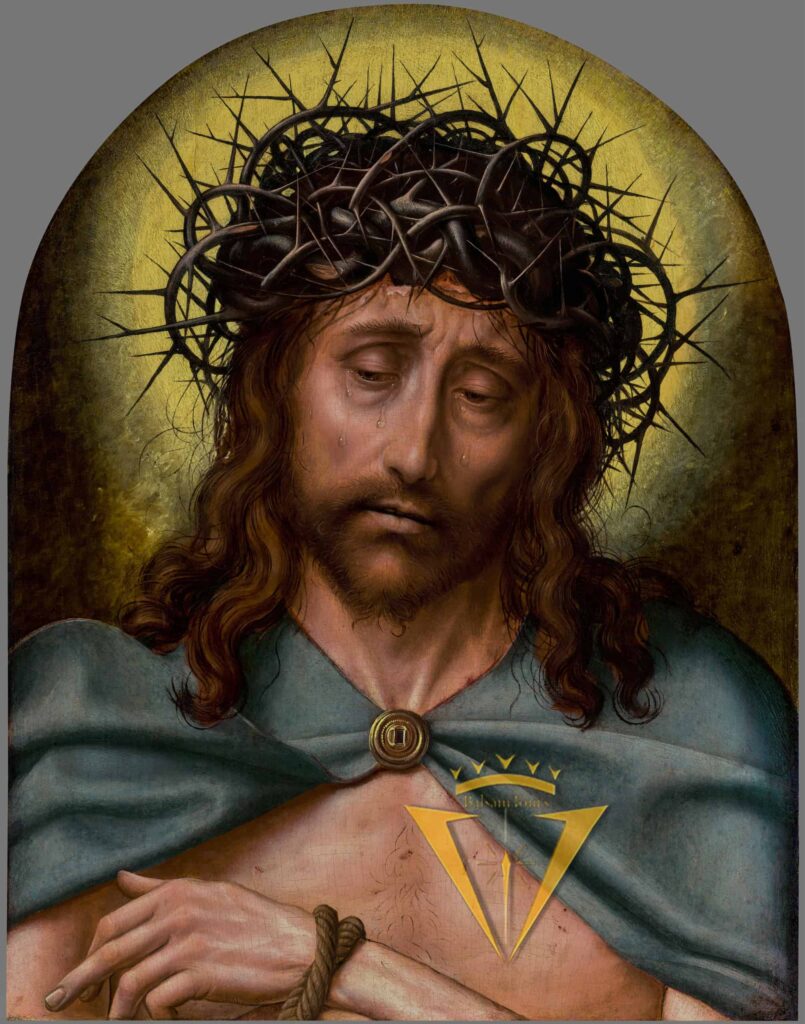
So when I read this ancient heading, it stops me. It says:
The words that follow weren’t written in a vacuum. They were shaped by people with histories, with sorrow, with redemption. And they’re not just meant to be read—they’re meant to be felt and sung. Out loud. In community. In hope.
Before the psalm gives us the line “Why are you downcast, O my soul?”
It tells us, “I know how it feels to be depressed. I’ve been there. Here’s my story. There’s hope. You won’t stay here, I promise.”
Coming next: Part 2 — Why Are You Downcast, O My Soul? Depression, Lament, and the Inner Dialogue of Hope
Very good.