
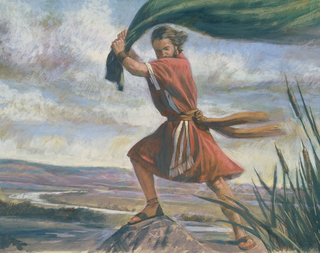
What exactly is “a double portion of your spirit”? The heart of the story in 2 Kings 2:1-14
Two Prophets, One Legacy
2 Kings 2:1–14 tells a vivid story full of symbolism, emotion, and divine mystery. We meet two prophets—Elijah and Elisha—on the day when Elijah will be taken up into heaven by a whirlwind. But what strikes me most is not the dramatic departure, but the human details: the stubborn loyalty, the grief, the unspoken tension.
Elijah seems worn, maybe tired. There’s a distance to him, as if he’s already halfway gone. Elisha, on the other hand, comes across like a young, eager apprentice—devoted, emotional, and unwilling to be left behind. Elijah tells him three times to stay back, but Elisha refuses. Over and over, he answers, “As surely as the Lord lives and as you yourself live, I will not leave you.”
This isn’t mere obedience. It’s love. It’s loyalty. It’s the heart of a disciple who knows something sacred is about to happen.
Everybody Knew
What’s eerie in this story is that everyone seems to know that Elijah will be taken that day! Prophets in every town whisper it to Elisha like it’s a funeral no one wants to name. “Do you know the Lord will take your master from you today?” they ask. And Elisha—probably holding back tears—says, “Yes, I know. Say nothing about it. (translated: I know! now shut up!)”
He won’t look away. Not now. Not at the end.
It’s like when the hospital calls to say you should come now. Whatever was on your calendar no longer matters.
A River Crossed, A Mantle Passed
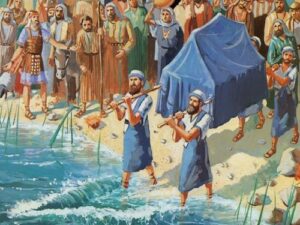
The two prophets reach the Jordan River—this scene is loaded with symbolism. It hearkens back to when Moses split the Red Sea to escape Egypt. Then Joshua, his successor, parted the Jordan to enter the Promised Land. Now Elijah, too, strikes the river, and the two walk through on dry ground. Lets pause and take that in. A leader. A successor. A holy moment repeated across generations.
Then comes the question. Elijah asks, “What can I do for you before I am taken?” And Elisha doesn’t hesitate:
“Let a double portion of your spirit be upon me.”
It’s a big ask. Maybe Elisha doesn’t even know if Elijah can grant it. But that’s not the point. He’s saying out loud what’s in his heart: “I want to be you!—and more.”
Remembering My First Job
It reminds me of when I was just starting out as a meat cutter at a grocery store. I was fresh out of high school, full of energy, and still figuring out who I was. My boss, Joe, was only a few years older than me, but he carried himself with wisdom, maturity, and a quiet strength that earned everyone’s respect. When he went on vacation, Tony—a gruff, older Vietnam vet—took over. He had a bit of a reputation. One day the big boss walked in and said, “Things seem to be running great without Joe, huh Tony?”
Tony didn’t miss a beat.
“Great bosses make sure their people run things well without them needing to be there.”
End of conversation.
That moment stuck with me. Tony certainly wasn’t trying to prove he was better than Joe. He was honoring him—saying, “I’m able to run things great because of the kind of boss Joe is.”
That’s what I think Elisha was doing when he asked for a double portion of Elijah’s spirit. He wasn’t looking for power. It wasn’t about the position or reknown. He wasn’t looking to out do him.
He wasn’t waiting for the old man to move on so that he could finally do things his way.
He was saying, “I want to become like you. I want your heart. Your fire. Your faithfulness. I want to carry you forward.”
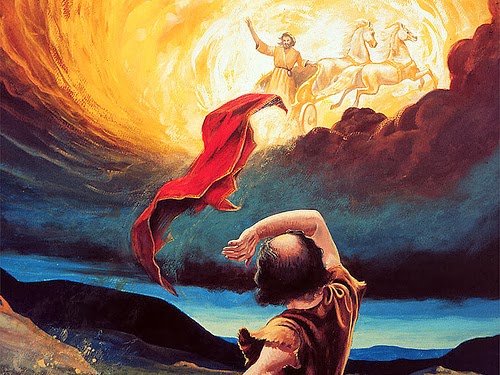
Taking on Elijah’s spirit wasn’t enough. Elisha wanted a double portion—because he wasn’t trying to replace Elijah, he was trying to lose himself in what Elijah had modeled. He wanted to make sure he didn’t default to his own way. He wanted to pick up exactly where Elijah left off leaving no doubt Elijah was still his master.
The Moment of Truth
Elisha stood at the edge of the Jordan, holding Elijah’s fallen cloak.
This wasn’t just a symbolic gesture—it was a direct echo of sacred history.
Moses parted the Red Sea to lead God’s people out of Egypt…
but Moses never set foot in the Promised Land.
Joshua, his successor, parted the Jordan River to lead the people into the Promised Land.
Then Elijah, like Moses, parted the Jordan and left this world on the other side—never to return.
And now Elisha, the successor, stands alone.
This is his moment of truth.
To return to the land of promise… he must step into the river with nothing but the memory of his mentor and the question burning in his heart:
“Where is the Lord, the God of Elijah?”
The cloak strikes the water. The river parts. Elisha walks forward—not just geographically, but spiritually. He’s stepping back into the Promised Land, into his calling, yet into the unknown.
This is what everyday faith looks like.
Not a speech. Not a ceremony. Just one trembling step, in full view of a raging river. Elisha didn’t know what would happen. He just knew what he had to do. So he lifted the cloak. Struck the water. And stepped forward.
The Only Way to Know Is to Try
Elisha tore his clothes in grief, then picked up Elijah’s cloak.
The torch had been passed.
But he didn’t pick it up with a roar of triumph.
He picked it up with a question:
“Where is the Lord, the God of Elijah?”
That’s the part we rarely admit. That sometimes even when we are handed exactly what we asked for, we’re still unsure. Because it comes wrapped in loss. It looks different than we pictured it would.
Elisha wasn’t just stepping into Elijah’s role. He was stepping into a future where nothing would ever be the same. He was the leader, not the follower.
And maybe that’s the tension we all carry when we move into our own calling.
We ask for a double portion… but deep down, we wonder if God will really meet us there.
We reach for the cloak, but our hearts are still standing in the place of parting.
Maybe asking God to make it clear is a sign of our lack of faith.
This story doesn’t end with a sermon—it ends with a step.
Elisha struck the waters.
And they parted.
What if the only way to find out whether God will show up…
is to take that step?