

For years, from my mid 20’s to my late 30’s I was involved with a religious new testament based cult. One verse that got blasted from the pulpit more that any other was:
“The harvest is plentiful, but the laborers are few; therefore plead with the Lord of the harvest to send out laborers into His harvest.”
—Luke 10:2
It was our anthem, our mission statement, our spiritual cattle prod.
The implication was clear: God wants people saved, and if you really love Him, you’ll be out there recruiting.
If the harvest is plentiful and people are going to hell, then what are you doing just sitting there?
I lived under the pressure of that verse for 14 years in a tightly controlled religious group that demanded constant output. We were trained to measure our faithfulness by how many people we were inviting to church, how many we were studying the Bible with, how many Bible talks we attended, and how many we led. Everything came back to the harvest. Everything came back to performance.
But the longer I sit with this passage—outside that system and free from its fear—the more questions it raises. Big ones.
What Exactly Is the Harvest?
If you’re going to build an entire theology or lifestyle around a single verse, you’d better make sure you know what the verse actually means. So I started asking: What is this harvest Jesus is talking about?
Is it just about getting people to church?
Conversions? Baptisms? Attendance numbers?
Or is Jesus pointing to something deeper?
Many scholars (like Tim Mackie of the Bible Project) see “the harvest” as symbolic of a moment of readiness. It’s not about a headcount—it’s about the condition of people’s hearts. In the prophetic tradition (see Hosea 6, Joel 3, Isaiah 27), the harvest is a moment when God gathers, restores, or judges. It has nothing to do with recruiting people; it’s about God creating a moment of transformation.
And here’s something that should have stood out all along:
When the seventy-two returned to Jesus, they didn’t bring a crowd of new recruits with them. There’s no mention of who they converted, how many joined their movement, or how many Bible studies they had lined up for next week.
Why? Because it wasn’t about numbers.
They weren’t trying to grow their congregation.
Nor were they keeping score.
They were doing what Jesus told them to do: freely give what you have received.
And for those still part of that group that might try to defend their actions by saying that the disciples were not sent on a mission to recruit. Then I would ask, “Then why are you using this passage to support a different mission?”
They went out with peace, healing, and hope—without demanding anything in return. No obligation. No conversion quotas. Just presence and proclamation. That’s the kind of “harvest” Jesus was after.
Who Is the Lord of the Harvest?
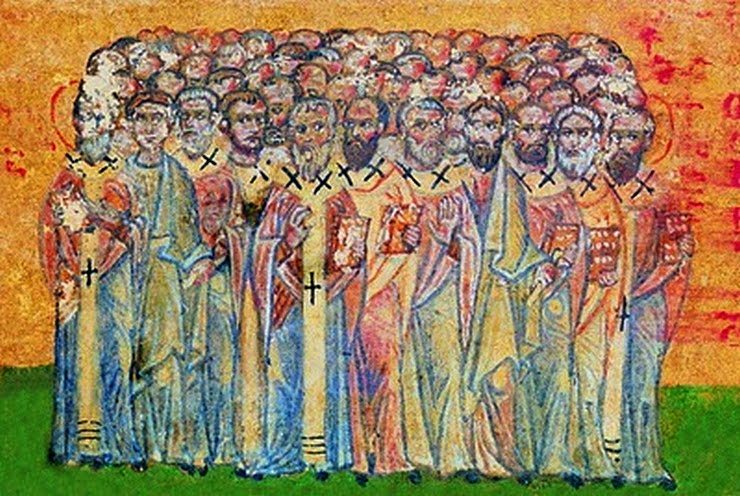
This is the only time Jesus uses that phrase. It’s clearly a reference to God—but more than that, it’s a picture of God as the one who is already doing the work.
The field belongs to God.
The harvest belongs to God.
You and I are not the managers—we’re participants.
But in the group I was part of, this verse was weaponized. The “Lord of the harvest” wasn’t portrayed as a loving God already at work, inviting us to join Him. He was portrayed more like a passive-aggressive boss yelling, complaining there are no workers. But really he is not complaining, he is trying to manipulate you into getting out there to work.
And that leads to the third—and maybe strangest—question of all:
Why Do We Have to Plead With the Lord of the Harvest?
Let’s be honest. The language Jesus uses here is weird.
“Plead with the Lord of the harvest to send out workers…”
Why would we have to plead with God to do what we thought He already wanted to do?
Does God need convincing?
Is He reluctant to send workers unless we ask nicely?
We never explored how we should understand that.
If you’ve been part of a religious group that centers itself around verses like this, but never explores their context, then beware. They will often bend the words around their intent to make it fit their agenda.
That’s exactly what happened to us. We were told to “pray for workers,” but really it was a pretext for guilt-driven recruitment. Prayer wasn’t about intimacy with God—it was a submersive message about people who were not doing their part…plead that the Lord of the Harvest can get through to them.
We were trained to understand prayer was more of a means to a result than to a deeper connection. And that, of course, makes sense when the depth of your spirituality is measured by your results!
The pleading is what is happening in Isaiah 6. Isaiah sees the glory of God and asks to be sent out. We plead that we can be who God needs us to be.
The other idea of “pleading with the Lord of the Harvest” is that we pray that it is God’s will that we go. Because lets face it, if it’s not His will, we will be ineffective.
But is this verse about urging God to act? It sounds like it is but that doesn’t really make sense does it?
What if it’s about God urging us to align?

The Harvest Is Plentiful… But So Is the Manipulation
One of the greatest red flags in a spiritual community is when a single verse gets quoted over and over without context, without nuance, and without anyone ever being allowed to question the context it’s being used in.
I heard Luke 10:2 at least a hundred times and it was always used to get people out there “sharing their faith”.
The verses that follow show Jesus sending out his disciples not with pressure, but with peace. Not with sales pitches, but with healing. Not with tracking sheets, but with trust. And when they come back, Jesus doesn’t ask them how many people they recruited.
He wants to know what happened to them.
But we’ll get to that in my next post.
For Now, Here’s What I’m Learning:
- The harvest doesn’t belong to us.
- The pressure to perform is not from God.
- The Lord of the harvest isn’t recruiting salespeople—He’s inviting us into the restoration of all things.
- And the first step is not action.
It’s prayer.
It’s pleading—not because God is hard-hearted, but because we are.
Up Next:
In the next post, I’m going to look at how Jesus taught us to pray—and why it changes everything about how we understand “pleading” with God. (Spoiler: it’s not about changing His mind. It’s about Him changing our hearts.)