

The Mystery
This is the reason that I Paul am a prisoner for Christ Jesus for the sake of you Gentiles– for surely you have already heard of the commission of God’s grace that was given me for you, and how the mystery was made known to me by revelation, as I wrote above in a few words, a reading of which will enable you to perceive my understanding of the mystery of Christ. In former generations this mystery was not made known to humankind, as it has now been revealed to his holy apostles and prophets by the Spirit: that is, the Gentiles have become fellow heirs, members of the same body, and sharers in the promise in Christ Jesus through the gospel.
Of this gospel I have become a servant according to the gift of God’s grace that was given me by the working of his power. Although I am the very least of all the saints, this grace was given to me to bring to the Gentiles the news of the boundless riches of Christ, and to make everyone see what is the plan of the mystery hidden for ages in God who created all things; so that through the church the wisdom of God in its rich variety might now be made known to the rulers and authorities in the heavenly places. This was in accordance with the eternal purpose that he has carried out in Christ Jesus our Lord, in whom we have access to God in boldness and confidence through faith in him.
Ephesians 3:1-12
So when I read this, Paul’s language can sound like God ignored or rejected the nations for centuries and then abruptly changed course. But that reading doesn’t actually fit the larger biblical story, nor Paul’s own theology. For aren’t we are all God’s children?
So let’s make sense of this.
What Paul is Saying…and not Saying
So Paul is not saying:
“Gentiles were excluded, now they’re included.”
He is saying:
“God’s purpose for Gentiles was always there, but how it would happen was yet to be revealed. And how it would happen without becoming Jewish was not even a thought!”
Election is vocational, not exclusionary
The Jews were chosen only as an example to the nations but the other nations were never rejected by God.
That is deeply biblical.
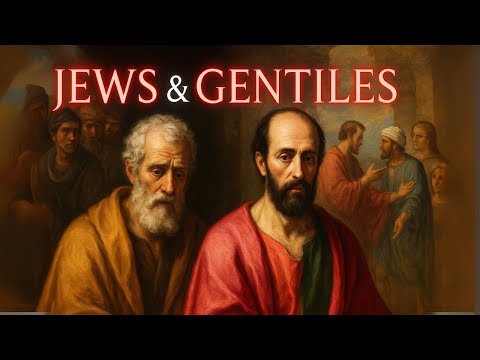
Israel’s election was for the sake of the nations, not instead of them.
- Abraham is chosen so that “all the families of the earth shall be blessed”
- Israel is called to be a priestly people, mediating God’s presence to the world
- The prophets consistently envision the nations streaming toward God, not being discarded
So when Paul speaks of Gentiles being “fellow heirs,” he is not describing a change in God’s heart, he’s describing a change in access and visibility. A revealing.
What actually was hidden before Christ
“that is, the Gentiles have become fellow heirs, members of the same body, and sharers in the promise in Christ Jesus”
The mystery is not that Gentiles would be included.
The mystery is how:
- Same inheritance
- Same body
- Same promise
- Without Torah conversion
- Without ethnic boundary markers
That is new.
Before Christ, Gentiles could:
- fear God
- pray
- receive blessing
- even worship Israel’s God
But they did so from the outside.
What was not clear before Christ is that:
- Jew and Gentile would belong to one body
- with no spiritual hierarchy
- united in Christ, not in ethnic identity
That’s the shock.
Why Paul says it was “not made known” before
Paul isn’t saying God was silent about Gentiles.
He’s saying the full shape of God’s plan wasn’t yet unveiled. Everything was always there in the Torah but none of it made sense or was even visible till Christ. The Holy Spirit continues to reveal Christ in the scriptures
Israel knew the nations mattered. They did not yet know that their covenant identity would be re-written in Christ while simultaneously erasing an identity found in lineage.
“Through the church” — why this matters cosmically
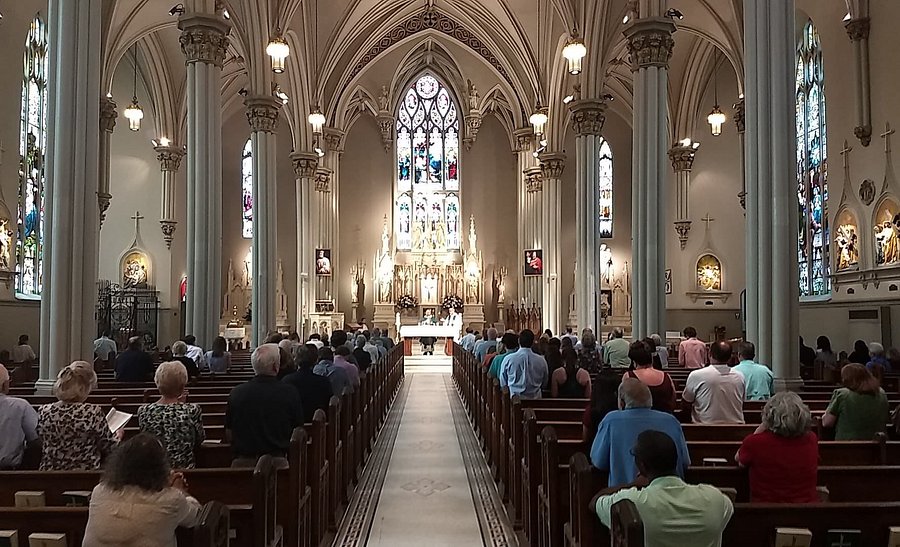
One of the most striking details in this passage is Paul’s language. He does not say through the people of God or through the kingdom of God. He says:
“so that through the church the wisdom of God in its rich variety might now be made known to the rulers and authorities in the heavenly places.”
That word matters.
“Church” (ekklesia) is not an Old Testament category. Israel is called a people, a nation, a priesthood—but not the church. Paul is naming something new, not because God has changed His purpose, but because that purpose has evolved and it’s important to recognize this change.
The church is not a replacement for Israel, nor is it a synonym for “religious people.” It is the visible, embodied gathering of reconciled humanity! Jews and Gentiles together, without hierarchy, without boundary markers, but as equals!
This is why Paul can say that through the church God’s wisdom is made known. God has chosen to reveal Himself, not through doctrine or scripture but through a community of people.
This community is a living example of reconciliation! The church becomes a living sign to the cosmos that division and hostility are not acceptable, and difference does not have to mean separation. The very existence of this reconciled community is the message. It is the new covenant!
God doesn’t just tell the world that He is like-a triune God. He embodies it in a people, who are learning—often imperfectly—to live as one.
Living In Community Is Messy
Our tendency towards fundamentalism has us drawing lines. We want clear “ins” and “outs” because:
- ambiguity weakens our control
- we value certainty over love
- transformation has too long of a timeline.
A “once-saved-always-saved” heaven-and-hell binary is tidy. Living in real community is not. Jesus’ way is not. Love is not.
Jesus does not invite people to cross a finish line. He invites them into transformation—an ongoing conversion of how we see, how we judge, how we belong. We want a clean boundary: you’re in, you’re out. We want certainty we can stand on. That was the tension between Jew and Gentile in Paul’s world, and it is still the tension in ours. What is it in us that needs to know who belongs and who doesn’t, even when we are told to love everyone anyway, even our enemies?

When Christianity becomes a system for sorting people, “in” becomes a place to stop. The work is done. To continue seeking is optional. But if Christianity is about transformation, then the moment we think we’ve arrived is actually where the work begins. It means trusting that God is at work even when we cannot see the evidence. When we don’t see it in our neighbor, and when we don’t see it in ourselves.
That may be the mystery Paul is pointing toward. Not a puzzle to be solved, but a life to be lived. We will never fully map how God moves through the world or through a human heart. We are only called to step into what we can see, to walk in the light we’ve been given, and to trust that more will be revealed as we go.