

Are We Really Being Transformed by Christ?
Psalm 112:1 opens with a declaration:
“Happy are those who fear the Lord, who greatly delight in his commandments.”
That verse hit me hard.
After all these years of following Christ—seeking truth, praying, trying to walk in His ways—why am I not happy? Why do I not delight in His commandments?
What am I waiting for?
What needs to happen for me to truly experience this joy the Psalmist describes? I can feel that I am I still holding onto, or seeking something from someone other than God?
Performance and Approval
If I’m honest, I think I’ve tied my happiness to my performance. When I do well—when I create value, when I’m productive, when others affirm me—I feel worthy of joy. But when I mess up or let people down, I turn inward. I shrink.
Now, some of that is normal. It’s part of being a conscientious human being. Of course I want to do good work. Of course it doesn’t feel great to disappoint others. But that’s not where my worth should come from.
And yet—even after years of walking with Christ—I’m realizing that I may have placed too much weight on doing things for His approval, rather than being transformed by His presence.
What’s Wrong With Seeking Jesus’ Approval?

It sounds noble, doesn’t it? Wanting Jesus to say, “Well done, good and faithful servant.”
(Matthew 25:21)
But here’s the thing: Jesus never calls His disciples to seek His approval. That line comes from a parable—a story with multiple layers of meaning. And in that parable, the deeper message is not about earning praise, but about not being afraid to use what we’ve been given for God’s kingdom.
In fact, the servant who displeased the master was the one who chose to live in fear. He was given grace—a talent, something he didn’t earn. But instead of doing something with it, he retreated. He buried it. And when the master returned, he justified his inaction by saying, “I knew you were a harsh man…”
His perception of the master was warped. He didn’t see a generous giver—he saw a demanding taskmaster. And that view shaped how he lived. He lived in fear, not because the master was harsh, but because he believed he was.
And that choice—to see God as someone who can’t be trusted—was on him.
A Different Kind of Servant
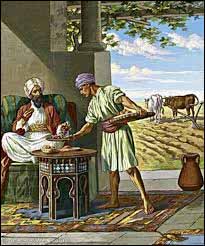
Jesus told another parable that complicates things even more:
“Suppose one of you has a servant plowing or looking after the sheep. Will he say to the servant when he comes in from the field, ‘Come along now and sit down to eat’? Won’t he rather say, ‘Prepare my supper…’? … So you also, when you have done everything you were told to do, should say, ‘We are unworthy servants; we have only done our duty.’”
(Luke 17:7–10)
That one can be tough to hear—especially for those of us raised with distant or critical fathers. We can easily twist this into a belief that God merely tolerates us. That He sees us as barely acceptable, unworthy of His love.
But that false image of God doesn’t just come from our childhood experiences—it’s also a message that gets preached from pulpits far too often. Sometimes in the name of humility, or holiness, we’re taught a view of God that emphasizes our worthlessness instead of our adoption. We’re told we’re tolerated, not treasured. That we’re barely hanging on, instead of being held.
But that is not the heart of the Father. He delights in His children. The Father welcomes us. He clothes us with righteousness. These aren’t contradictions—they’re an invitation to mature, Spirit-led faith.
The Difference Is in the Motive
Jesus isn’t telling us to live without joy or intimacy in our relationship with God. He’s saying: don’t do what you do for applause. Don’t serve to be seen. Don’t obey to earn approval.
Instead, serve because it’s who you’re becoming.
Following Christ means being transformed. We don’t love, serve, and give because we’re trying to win points—we do it because that’s what love does. That’s what Jesus does. That’s who He is, and that’s who we’re becoming.
The actions might look the same on the outside—but the motives behind them make all the difference.
One is performance.
The other is transformation.
Full-Circle Faith

“Happy are those who fear the Lord, who greatly delight in His commandments.”
(Psalm 112:1)
Our happiness doesn’t come from the approval of others—or even from the approval of the Lord.
That might sound strange at first, but it’s true. As God heals our distorted views of Him—as He rewrites the scripts we’ve inherited from painful pasts or performance-based religion—His commandments become a delight, not a duty.
They aren’t hoops to jump through for His approval.
They are the natural outworking of a heart being remade in His image. They’re no longer tasks we must perform to prove our worth—they’re reflections of who we are becoming.
And when our obedience flows from identity instead of insecurity, we’ll finally find the kind of joy the psalmist is talking about.