What a strange story. Elijah, one of the most powerful prophets in the Hebrew Scriptures, meets Elisha, a plow-driving farmer—and rather than giving him a pep talk or a vision or even a heads-up, Elijah walks by and throws his cloak over him. That’s it. That’s the whole call.
Elisha’s response? Burn the plows, slaughter the oxen, host a farewell feast, and walk away from it all. Forever.
Let’s be honest: both of these guys feel… kind of odd. Misfits. Socially offbeat. Maybe even emotionally unstable. Elijah’s curt. Elisha is extreme. It makes you wonder: why does it seem like being chosen by God looks so weird?
Elijah’s Post-Cave Mood
To understand this story, we have to zoom out. Elijah just had a showdown with 450 prophets of Baal on Mount Carmel—and won. But instead of revival breaking out, Queen Jezebel threatens his life. Elijah panics, runs into the wilderness, and basically says, “God, I’m done.”
In 1 Kings 19, God speaks to him not in the wind, earthquake, or fire—but in a “still small voice.” Then God gives him a list: Go back. Anoint this king. That king. And find your successor.
It’s as if God is saying, “You’re not the whole plan. You’ve been faithful, but your season is coming to a close. It’s time to pass the baton.”
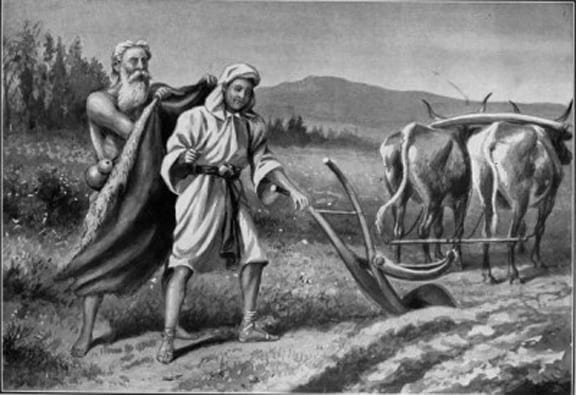
But Elijah doesn’t actually do all the things God told him to do—at least, not right away. He only does one: throws his cloak on Elisha. And he does it with minimal words, zero ceremony, and maybe even a touch of irritation. What have I done to you? he says to Elisha. In modern terms, that could be: “Don’t make a big deal out of this.” Or even: “I didn’t ask you to follow me.”
Is this spiritual burnout? Prophet fatigue? Or maybe a hard lesson in letting go?
Elisha’s Bonfire of the Past
And then there’s Elisha. His reaction is radical—like burning-the-ships level radical. He slaughters the oxen and uses the wooden plow and yoke to cook the meat, giving it away as a feast. Symbolically, he’s saying, There’s no going back.
To us, that might seem wasteful. Why not donate the equipment? Give the oxen to another farmer?
But God doesn’t value things the way we do.
To God, an act like this isn’t waste—it’s worship. It’s not that God needs Elisha to burn his plows, but maybe Elisha needs to do it. He needs to mark the moment. He needs to cut ties with the past and fully embrace the future.
It’s not unlike when Mary poured a jar of pure nard on Jesus’ feet—an act worth a year’s wages. Judas was incensed. Why this waste? But Jesus got it. He called it beautiful. He understood what Mary was doing, even when others did not.
God understands what it takes for our hearts to let go. He doesn’t mock dramatic devotion. He honors it.

Why the Weirdness?
So why do these prophets seem so strange? Elijah with his moodiness. Elisha with his dramatic bonfire.
Because calling often pulls people out of their comfort zones. It looks weird from the outside. It can even feel weird on the inside.
But weird doesn’t mean wrong. Prophets stand at the edges of society by design—speaking truth to power, challenging cultural norms, and disrupting the status quo. Their strangeness is often the symptom of seeing reality more clearly than the rest of us.
Tim Mackie of the Bible Project might point out how this whole moment is rich with symbolic action. The cloak isn’t just a garment—it’s legacy. The oxen aren’t just animals—they represent an entire way of life being laid down. It’s awkward, it’s abrupt, and it’s deeply human.
Moving Into a New Season
Elisha burned the plows.
Not out of disrespect for his past, but as a declaration that something new had begun. His old life wasn’t wrong. In fact, it was fruitful—twelve yoke of oxen suggest prosperity and purpose. But the next season required something different. Something deeper. Something all in.
Centuries later, Jesus would say:
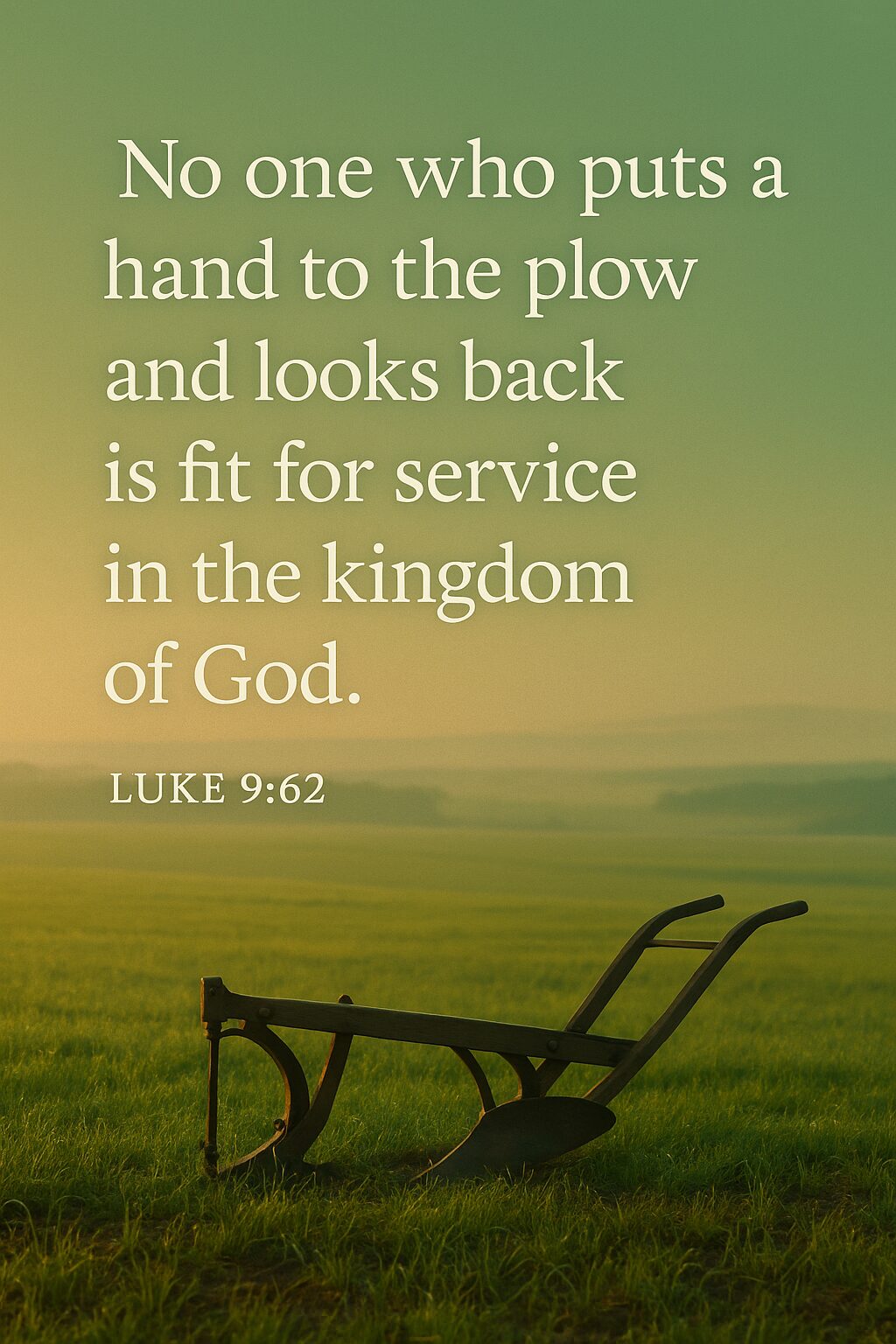
“No one who puts a hand to the plow and looks back
is fit for service in the kingdom of God.”
—Luke 9:62

It wasn’t a rejection of what had come before—it was a call to wholeheartedness in what comes next. Because the kingdom of God isn’t built by divided hearts. The path ahead—whether it’s a new calling, a new role, or a new surrender—can’t be walked while still glancing over your shoulder.
The old season mattered. It shaped you. It prepared you. But the new season calls for a focus and faith that can’t be half-hearted. And sometimes, the most faithful thing you can do is light a fire—not because God needs the sacrifice, but because you need the break from what was.
No turning back. Just forward.