
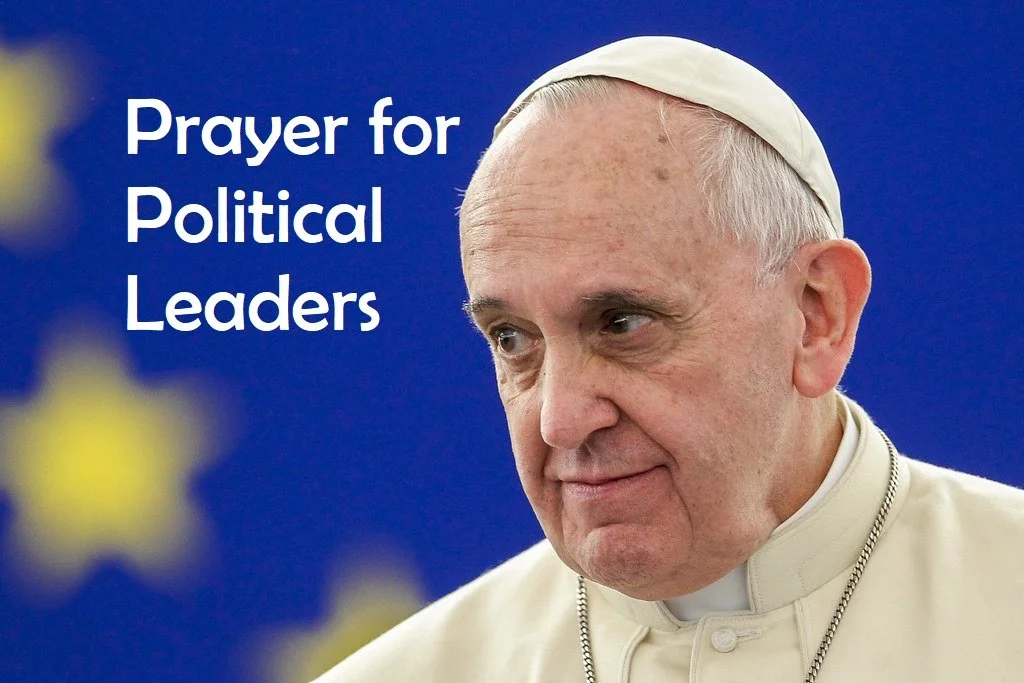
When Paul urged Timothy to pray “for kings and all who are in authority, so that we may lead a tranquil and quiet life in all godliness and dignity” (1 Timothy 2:1-2), he was writing to believers who lived under hostile rule. Roman officials weren’t protecting Christians, they were often trying to erase them. Yet Paul calls his community to intercede for those very leaders.
At first glance it sounds outcome oriented. And the outcome is self-directed. As if Paul is saying, pray for them because it benefits you. But the more I sit with this passage, the more room I’m leaving for the idea that the “tranquil and quiet life” Paul is describing is more an inner reality.
When I pray for someone who has authority over me and I fear or resent them, something shifts during prayer. The ruler, boss, or critic who seemed larger than life becomes simply a fellow human being. Their power over my spirit dissolves. Prayer breaks down the “us versus them” walls and exposes our shared need for mercy. I begin to experience the tranquil and quiet life Paul names not because circumstances suddenly favor me, but because my heart is no longer controlled by anxiety, fear or thoughts of revenge.
Beyond Dualistic Thinking
Paul’s next lines widen the lens:
God “desires all people to be saved and to come to the knowledge of the truth” (v. 4).
For a first-century Jew, that was staggering. Pray for the emperor? Believe God wants even persecutors inside His circle of grace? This is non-dual vision. No insider/outsider, no enemy/friend. Just one God whose love embraces everyone.
Wrestling with the “Mediator”
“For there is one God and one mediator between God and humanity, the man Christ Jesus.”
…and there is “one word” that really throws me in this sentence.

It’s the word, “mediator”. It’s a strange word to use in the sense of how it is commonly used by most of us. As most of us understand “a mediator” using it here implies that God is unable to reconcile with us and we are unable to reconcile with him and Jesus is an objective third party who will settle us both down and find a middle ground where we will both compromise. That doesn’t make any sense at all in light of the nature of God. God chases us down to show us mercy and forgiveness and grace. God became one of us and would rather take on death than reject us. God is in constant pursuit of us. God does not need a mediator to settle things!
So I had to do a little research on the word used for “mediator”. The Greek word mesitēs is less about an objective referee and more about a bridge-builder, one who “stands in the middle” to unite. In Jesus, God steps into our humanity to meet us where we are. The barrier isn’t God’s reluctance, which doesn’t exist, rather it’s our own ignorance and blindness. Christ embodies both God and man. Jesus represents the fullness of God in human form that we may strive to be like Him. He bridges the gap between us and God…between us and our divinity.
Quiet Evangelism
I once belonged to a group that measured faithfulness by how many people you evangelized each day. We were told that because God wants all people saved, we had to tell everyone. Sure prayer was important to that group, but what was measured daily, was how many people you brought to church with you. Paul’s focus here is prayer, not conversions. In fact, he doesn’t even mention converting the leaders. Augustine captured the essence of this when he said, “Preach the gospel at all times; when necessary, use words.”
A life marked by steady love and intercession is proclamation. We witness by embodying peace, not by coercion.
Living Free
So I return to Paul’s opening words. Praying for those in power—especially when they misuse it—liberates the heart. It refuses to let fear, resentment, or political chaos dictate our inner climate. It names even our oppressors as fellow image-bearers, suffering their own corruption. And in that recognition, the “enemy” loses the ability to rule us.
A tranquil and quiet life is not about withdrawal; it’s about freedom. Freedom from our own fears, bias and hurts. Freedom that allows the kingdom of God to break in, one prayer at a time.