
Matthew 3:1-12
In those days John the Baptist appeared in the wilderness of Judea, proclaiming, “Repent, for the kingdom of heaven has come near.”
This is the one of whom the prophet Isaiah spoke when he said, “The voice of one crying out in the wilderness: ‘Prepare the way of the Lord, make his paths straight.’”
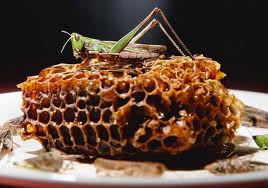
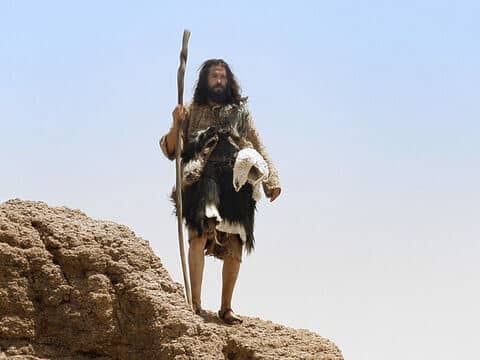
Now John wore clothing of camel’s hair with a leather belt around his waist, and his food was locusts and wild honey. Then the people of Jerusalem and all Judea were going out to him, and all the region along the Jordan, and they were baptized by him in the river Jordan, confessing their sins.
John’s Welcome
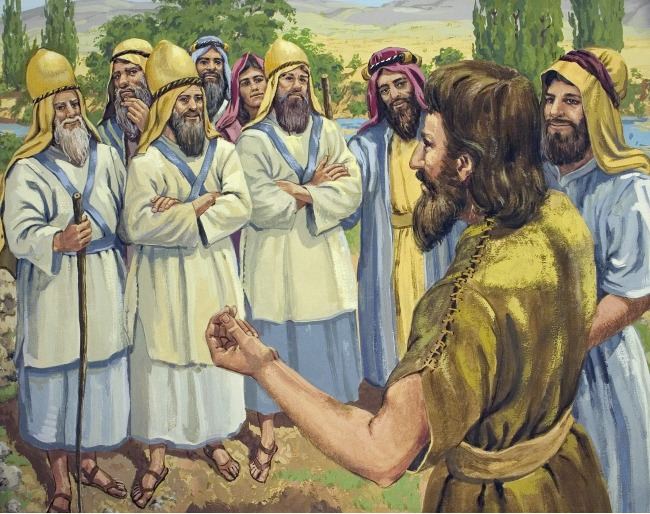
But when he saw many Pharisees and Sadducees coming for baptism, he said to them, “You brood of vipers! Who warned you to flee from the wrath to come? Bear fruit worthy of repentance. Do not presume to say to yourselves, ‘We have Abraham as our ancestor’; for I tell you, God is able from these stones to raise up children to Abraham. Even now the ax is lying at the root of the trees; every tree therefore that does not bear good fruit is cut down and thrown into the fire.
“I baptize you with water for repentance, but one who is more powerful than I is coming after me; I am not worthy to carry his sandals. He will baptize you with the Holy Spirit and fire. His winnowing fork is in his hand, and he will clear his threshing floor and will gather his wheat into the granary; but the chaff he will burn with unquenchable fire.”
What is the significance of mentioning what John the baptist wore and ate?
1. John’s Clothing and Diet Signal That He Is a Prophet, Specifically, a New Elijah
Camel’s hair and a leather belt immediately echo 2 Kings 1:8, where Elijah is described as:
“A hairy man, with a leather belt around his waist.”
Israel believed Elijah would return before the Messiah (Malachi 4:5–6).
By dressing like Elijah, John is embodying the prophetic tradition and announcing:
“The time you’ve been waiting for is here.”
His very appearance is a message.
2. His Lifestyle Signifies Radical Simplicity and Detachment
Locusts and wild honey were the food of someone living outside the structures of society.
John doesn’t eat the meals of the privileged.
He doesn’t live in the temple system.
He doesn’t participate in the social or economic expectations of the religious elite.
His life is a protest. His simplicity demonstrates:
- He is not building his own kingdom.
- He is fully surrendered to God’s mission.
- He is untouched by the corruption of political and religious power.
In other words, he lives the message he preaches.
3. His Lifestyle Confronts the Religious Leaders Who Come to Observe Him
The Pharisees and Sadducees show up doing what they always do, evaluate religious activity from a distance.
John’s clothing and diet themselves rebuke them:
- They emphasized external piety and tradition.
- John embodies internal repentance and radical obedience.
He stands in sharp contrast to their comfort, privilege, and status.
His rough clothing exposes their obsession with appearance.
His wilderness diet exposes their motivation behind their religious mask is for indulgence and comfort.
John’s whole life is a prophetic sign:
Repentance looks like stepping out of the systems that numb you.
4. His Appearance Places Him in the Wilderness, the Symbolic Place of New Beginnings
The wilderness in Scripture is where God forms His people:
- Israel is shaped in the wilderness after the Exodus.
- Elijah encounters God in the wilderness.
- Jesus will be tested in the wilderness.
John’s diet and clothing emphasize his location:
He is outside edge of the old order because God is ready to begin something new.
The kingdom of heaven isn’t coming through Jerusalem’s institutions.
It’s coming from the margins, from the wild places where God reshapes His people.
5. His Diet Has Symbolic Meaning, Too
Locusts
- Clean according to Levitical law
- Symbol of judgment in the days of Moses and the prophets
- A reminder that John lives in the tension of calling Israel to repent before judgment falls
Wild honey
- Symbol of God’s provision in the wilderness
- Echoes the “land flowing with milk and honey”
- A reminder that repentance leads to blessing and new life
Together, locusts + honey reflect John’s message:
Judgment and mercy. Warning and promise.
In Summary
Matthew includes what John wore and ate because it reveals John’s identity and message:
- He is the new Elijah, the forerunner of the Messiah.
- His radical simplicity validates his prophetic authority.
- His lifestyle rebukes the religious establishment.
- He stands in the wilderness because God is creating something new.
- His diet symbolizes both the judgment and provision that is at the heart of his message.
Nothing is accidental.
John’s entire life is the sermon before he even opens his mouth.