Is it all really vanity? It could be but it doesn’t have to be.
Ecclesiastes 1:2, 12-14; 2:18-23
Vanity of vanities, says the Teacher, vanity of vanities! All is vanity.
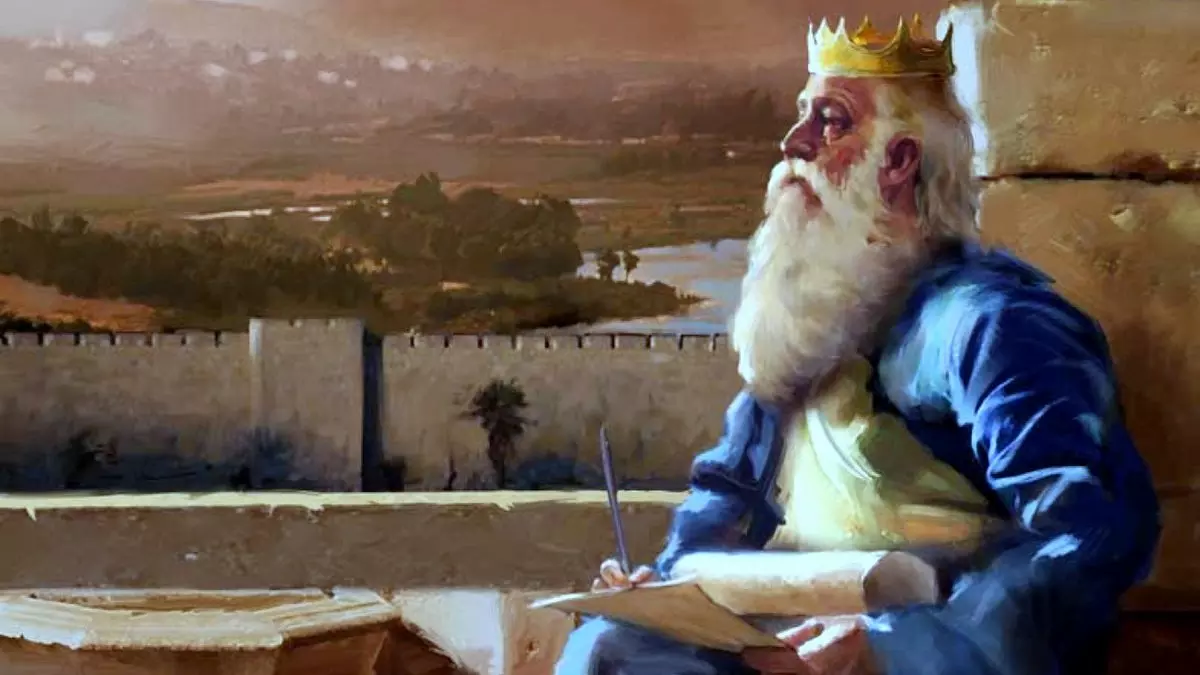
I, the Teacher, when king over Israel in Jerusalem, applied my mind to seek and to search out by wisdom all that is done under heaven; it is an unhappy business that God has given to human beings to be busy with. I saw all the deeds that are done under the sun; and see, all is vanity and a chasing after wind.
I hated all my toil in which I had toiled under the sun, seeing that I must leave it to those who come after me — and who knows whether they will be wise or foolish? Yet they will be master of all for which I toiled and used my wisdom under the sun. This also is vanity.
So I turned and gave my heart up to despair concerning all the toil of my labors under the sun, because sometimes one who has toiled with wisdom and knowledge and skill must leave all to be enjoyed by another who did not toil for it. This also is vanity and a great evil. What do mortals get from all the toil and strain with which they toil under the sun? For all their days are full of pain, and their work is a vexation; even at night their minds do not rest. This also is vanity.
So I was at Dollar General the other day and I met someone and we were chatting it up a good bit. As the conversation went on I asked, “So what do you do for a living?” their response caught me off guard.
“I’m the Teacher.”
I said, “Oh, you mean you’re a teacher?”
Again, “No, I am The Teacher.”
So I couldn’t resist.
Me: So in Ecclesiastes, when you say, “under heaven” or “under the sun” you’re just talking about life here on earth, right?
The Teacher: You’re spot on in interpreting “under the sun” and “under heaven” as phrases pointing to life in this physical world, apart from eternal perspective. Ecclesiastes deliberately limits its focus to human experience without reference to divine revelation or eternal justice. In doing so, it shows us what the world looks like when we try to extract meaning purely from what we can build, achieve, or enjoy here and now.
That’s the key: it’s not saying all is meaningless in an absolute sense, it’s saying that everything is meaningless when viewed only through the lens of this life.
Me: In the book, you — The Teacher — just seem hopeless and disillusioned. We go to teachers because we feel disillusioned, hoping they can help us make sense of it all.
The Teacher: Well, by positioning myself as The Teacher (Qoheleth), I give the perspective of someone who chased every path we think might give us fulfillment:
- Wisdom and knowledge
- Pleasure and possessions
- Work and achievement
- Legacy and inheritance
And yet, after walking every road to its end, I hit the same wall: “This also is vanity. A chasing after the wind.”
This might seem like nihilism — it’s not — it’s disenchantment. It’s what happens when the things we hoped would satisfy us don’t. This disillusionment isn’t meant to drive us to despair, it’s meant to deconstruct the illusions we live by.
Me: Ok, but you even said — and I quote — “So I turned and gave my heart up to despair.” So how are you not despairing?
The Teacher: That is exactly the right question. You just need to keep reading further.
Ecclesiastes doesn’t end in despair. The final verses (12:13–14) say:
“Fear God and keep his commandments, for that is the whole duty of everyone. For God will bring every deed into judgment, including every secret thing, whether good or evil.”
In other words: the life that is meaningless without God and eternity becomes meaningful in God and eternity.
Ecclesiastes is a movement from existential collapse to spiritual awakening. Once you’ve given up on all the illusions — wealth, legacy, wisdom, power — you’re finally ready to embrace a different kind of meaning. Not one you create, but one you receive.

Me: Okay, I’m seeing what you’re saying. Why spend so much time explaining what doesn’t work?
The Teacher: Ecclesiastes offers a quiet, sober hope, not the flashy kind. It’s a hope that says:
- Yes, your work will be undone or forgotten, but it still matters if done with faithfulness.
- Yes, you will die like the fool in the eyes of the world. But how our lives are seen through God’s eyes is all that matters.
- Yes, your legacy may be squandered, but what you did in obedience and love is never wasted.
- Yes, wisdom doesn’t save you from mortality, but it orients you toward something greater than mortality.
It’s as if Ecclesiastes tears down all the scaffolding of human pride and ambition so we can finally learn it’s not how big of a life you build but rather what you build your life on that matters. Learning to build not on sand but on solid rock.

Me: Hmmmm… building our lives on solid rock… where have I heard that before?
The Teacher: Well, I’ve heard that some scholars and theologians see Ecclesiastes as a kind of prelude to Christ. It sets up the problem, and shows that Jesus is the only answer:
- Jesus came into a world of toil and futility.
- Jesus also left his work in the hands of flawed and foolish humans.
- And yet Jesus redeems our labor (1 Cor 15:58), offers rest for our souls (Matt 11:28), and invites us to store up treasures in heaven (Matt 6:19–21), where the work is not in vain.
Me: Well this has been a great talk! Thanks for clearing things up. When I read Ecclesiastes, all I saw was a man — who seemed to be a great man — who looked deeply into the meaning of life but all he saw was emptiness staring back at him.
The Teacher: Well, yes, that is part of it. But for those brave enough to face that same emptiness, a strange gift emerges: the space to receive a different kind of purpose, one that isn’t rooted in striving or control.
I let speak the voice that says, “give up.” So that I can answer that voice, with a call to “wake up!”
Let go of the illusion that toil can secure you lasting meaning and receive the kind of meaning only God can give.
I glanced in the teacher’s cart — there was food, and drink — and he went on his merry way.